

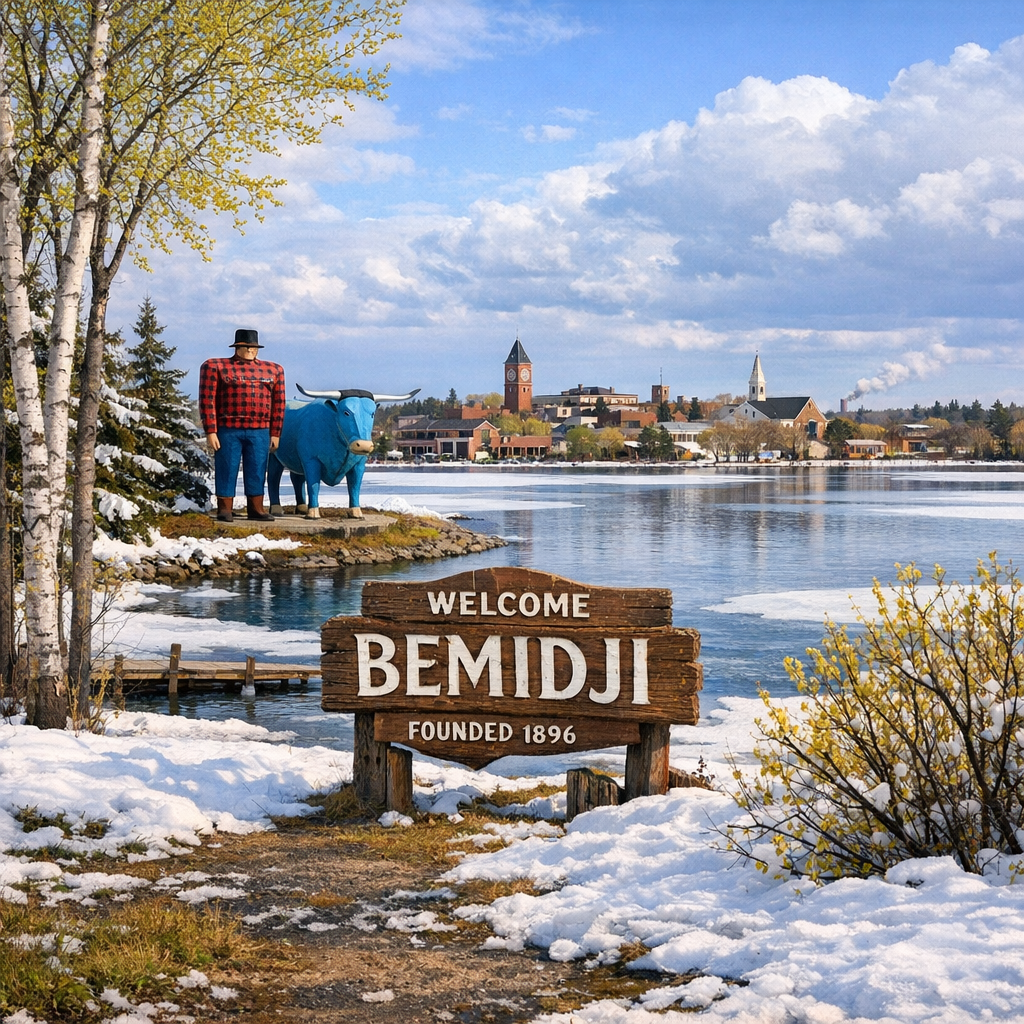
Bemidji, located in northern Minnesota, experiences a humid continental climate characterized by significant seasonal variations. Understanding these patterns is essential for residents and visitors alike.
Winter: Frigid and Snowy
Winters in Bemidji are notably harsh. Average low temperatures in January can drop to -2°F (-19°C), with highs around 18°F (-8°C). Snowfall is substantial, contributing to the city’s winter landscape. The season typically spans from late November to early March, with temperatures often remaining below freezing throughout this period.
Spring: Gradual Thaw
Spring brings a gradual warming trend. By April, average highs reach 50°F (10°C), and lows hover around 29°F (-2°C). This season is marked by melting snow and budding flora, signaling the end of the long winter.
Summer: Warm and Pleasant
Summers are relatively short but comfortable. July, the warmest month, sees average highs of 79°F (26°C) and lows around 58°F (14°C). This period offers ample opportunities for outdoor activities, with longer daylight hours and moderate humidity levels.
Fall: Crisp and Colorful
Autumn is characterized by cooler temperatures and vibrant foliage. By October, average highs decrease to 52°F (11°C), with lows around 35°F (2°C). This season provides a picturesque transition between the warmth of summer and the cold of winter.
Understanding Bemidji’s climate is crucial for planning activities and appreciating the natural beauty that each season offers.